influencer marketing has become an important part of modern digital marketing. as consumers spend more time social media platforms, brands are looking for effective ways to reach potential customer in a natural engaging manner. influencer marketing allows business to collaborate with individuals who have an established audience, strong online presence, and influence within a particular more than.
Unlike traditional advertising, influencer marketing often feels more personal because the recommendation comes from person whom the audience already follows and trusts. Influencers can introduce products, services, or brands through social media posts, videos, stories, reviews, tutorials, and other types of engaging content.
What Is Influencer marketing ?
Why Is Influencer Marketing Important for Businesses
Consumers are exposed to a large amount of advertising every day. Influencer marketing provides businesses with another way to communicate their message through content that fits naturally into Influencers often build communities around specific interests, lifestyles, industries, topics. local SEO strategies to attract Their followers may actively engage with their content through likes, comments, shares, questions, and discussions.
-> influencer marketing can help businesses achieve several objectives, including:
-> Increasing brand awareness
-> Reaching new and relevant audiences
-> Building brand credibility
-> Generating social media engagement
-> Promoting products and services
-> Supporting product launches
-> Driving website traffic
-> Generating potential leads
-> Encouraging customer interest and conversions
Reaching New and Relevant Audiences
One of the biggest advantages of influencer marketing is its ability to help brands reach audiences that may be difficult to access through traditional advertising methods.
Influencers usually create content for a specific audience. Their followers may share common interests, preferences, lifestyles, or purchasing behaviors. This creates an opportunity for businesses to introduce their products to people who are more likely to be interested in what they offer.
For example, a skincare brand can collaborate with beauty creators who regularly create skincare routines, product reviews, educational content. This type of targeted exposure can make influencer marketing more relevant and meaningful.
Building Trust and Brand Credibility
Trust plays an important role in modern purchasing decisions. Customers often research products, compare options, read reviews, and look for opinions before making a purchase.
Influencers can help brands communicate their products through personal experiences, demonstrations, reviews, and recommendations. When the collaboration is authentic and relevant, it can help a brand appear more approachable and trustworthy.
However, businesses should carefully select influencer marketing whose values, content style, and audience match the brand. “and weaken customer trust. ”A partnership that feels forced or unrelated can have the opposite effect, reducing audience interest and potentially damaging the brand’s credibility and reputation over time.
Micro-Influencers vs. Macro-Influencers
Influencers marketing can generally be categorized according to the size of their audience. Large influencers can provide extensive reach, while smaller creators may offer highly engaged niche communities.
Micro-influencers often focus on specific niches and have a strong relationship with their followers. Their content can feel more personal and community-driven.
Macro-influencers often focus on specific niches and may have a strong person relationship with their followers. Their content can feel more personal and community-driven.
The best choice depends on the campaign objective, on target audience, budget, industry, and desired results. Businesses should not select influencers based only on follower count.
Choosing the Right Influencer
Selecting the right influencer marketing is one of the most important parts of an influencer marketing campaign. A large following does not automatically guarantee successful results.
Brands should consider factors such as:
Audience Relevance:
The influencer’s audience should match the brand’s target customers.
Engagement:
Likes, comments, shares, saves, and other interactions can provide insight into audience involvement.
Content Quality:
The influencer should consistently produce professional, creative, and valuable content.
Brand Alignment:
The influencer’s personality, values, and communication style should be compatible with the brand.
Authenticity:
Creators who maintain genuine relationships with their audience can often deliver more natural brand collaborations.
Creating Effective Influencer Campaigns
A successful influencer marketing campaign begins with a clear objective. Businesses should determine whether they want to increase awareness, generate engagement, promote a product, drive traffic, or support sales.
After defining the objective, the brand can identify suitable influencers and develop a campaign concept. Influencers should have enough creative freedom to present the brand in a way that feels natural to their audience while still following the campaign’s key requirements.
Different types of influencer content can be used, including:
-
- Product reviews
-
- Tutorials
-
- Unboxing videos
-
- Instagram Reels
-
- YouTube videos
-
- Social media stories
-
- Educational posts
-
- Product demonstrations
-
- Giveaways
-
- Sponsored content
-
- Brand collaborations
Influencer Marketing and Content Creation
Influencer marketing is closely connected with content marketing. Instead of simply displaying an advertisement, brands can use creators to develop entertaining, educational, informative, or inspirational content.
High-quality content can help a product become more memorable and encourage audiences to learn more about the brand. Videos, short-form content, tutorials, and demonstrations can be particularly useful for showing how a product works.
Brands can also repurpose influencer-created content across their own digital marketing channels, where appropriate and with necessary usage rights. This approach can increase content variety, strengthen audience engagement, build brand awareness, and create more opportunities for meaningful customer interactions online.
Measuring Influencer Marketing Results
Measuring campaign performance is essential for understanding whether an influencer marketing collaboration is delivering value. Businesses should define key performance indicators before launching the campaign.
Important metrics can include:
. Reach and impressions
-
- Engagement rate
-
- Likes and comments
-
- Shares and saves
-
- Website visits
-
- Click-through rate
-
- Leads generated
-
- Conversions
-
- Sales
-
- Cost per acquisition
-
- Return on investment
- The right metrics depend on the campaign objective. For example, a brand-awareness campaign may focus heavily on reach and engagement, while a performance-focused campaign may prioritize clicks, leads, and conversions. Regularly reviewing these results helps businesses identify successful strategies, improve future campaigns, and allocate marketing budgets more effectively.
The Future of Influencer Marketing
Influencer marketing continues to evolve as social media platforms, content formats, and consumer behavior change. Short-form video, live content, creator-led communities, and niche content are becoming increasingly important for brands looking to build stronger relationships with their audiences.
Artificial intelligence is also influencing digital marketing and content creation. Brands and creators can use AI-powered tools for research, insights, and campaign optimization. However, authenticity and human connection remain important because audiences still value genuine communication.
The future of influencer marketing is likely to focus less on simply counting followers and more on relevance, engagement, trust, content quality, and measurable business outcomes.
Conclusion
Influencer marketing has become a powerful way for businesses to connect with new and relevant audiences. By working with the right creators, brands can increase awareness, build credibility, generate engagement, and human management communicate their products in a more natural and relatable way. when combined with authentic human communication.
1. sponsored content
Sponsored content is one of the most common forms of influencer marketing. In this approach, a brand pays an influencer to create content featuring its product or service. The content may be published as an Instagram post, Reel, YouTube video, story, blog article, or another social media format.
2. Product Reviews
Product reviews allow influencer marketing share their experience with a product or service. They may explain the features, benefits, usage, advantages, and overall experience.
Reviews can be especially useful products where customers want additional information before making purchase. Honest informative reviews help potential customers the product more clearly.
3. Product Demonstrations
A product demonstration shows customers how product works in real-life situations. Influencers can create videos showing how product, explaining its features, or demonstrating different applications.
This type of content can be highly effective because audiences can visually understand the product instead of simply reading about it.
4. Giveaways and Contests
Giveaways and contests can help brands increase social media engagement and attract attention to their products. Influencers can encourage followers to participate by following the brand, commenting, sharing content, or completing another campaign action.
When planned correctly, giveaways can increase visibility and introduce a brand to new audiences.
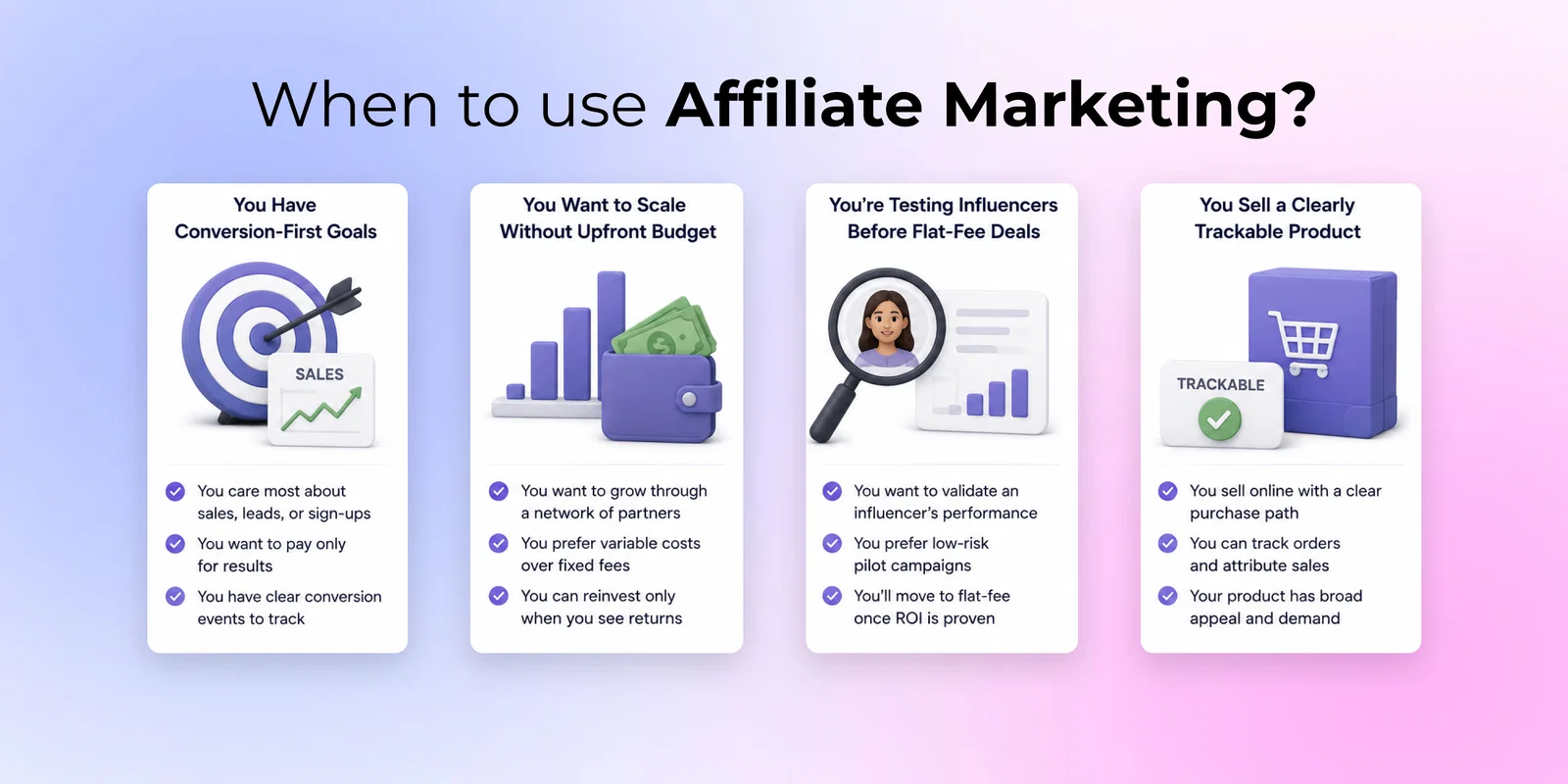
5. Affiliate Influencer Marketing
Affiliate marketing allows influencer marketing to earn a commission when their audience purchases a product through a specific link or promotional code.
This model can be attractive to businesses performance can be tracked through clicks, sales, or conversions. “while generating measurable results for brands.”
Affiliate influencer marketing can help businesses reach specific customer groups through creators who already have established audience. Influencer marketing can introduce products through reviews, tutorials, social media posts, or short videos that explain how the product works. Their content can encourage followers to visit the brand website, use a discount code, or make a purchase. Since each influencer receives a unique tracking businesses can monitor the results of individual promotions. This information can help marketers understand which creators, products, and content formats generate better responses. It also allows brands to improve future campaigns based on real customer actions and measurable performance.
Pingback: Local SEO Strategies to Help Businesses Attract Nearby Customers - Growvexa